Human website traffic may be falling but enrolments don’t have to
Feb 11, 2026 · 5 min read


Oliver Matthews
Oliver Matthews is a former CMO and now advises universities and business schools on marketing and digital strategy.


Key takeaways
- Human website traffic is declining as AI tools increasingly mediate how applicants research universities.
- Demand has not disappeared — prospective students are simply relying less on direct website visits.
- Traditional traffic growth is becoming a less meaningful success metric than conversion of high-intent candidates.
- Institutions must adapt their content, structure, and brand clarity to remain visible and competitive in AI-driven discovery.
Many schools are seeing a drop in organic website traffic as prospects increasingly rely on AI summaries and search results. That doesn’t mean demand is falling. It means behaviour has changed. The focus now needs to shift from attracting more visitors to converting fewer, more intentional candidates — and rethinking what success metrics really matter.
2024 was the year that human traffic became a minority on the internet. Imperva’s Bad Bot Report showed that already in 2024, bots accounted for more than 50% of the internet’s traffic, and GenAI is now driving a significant amount of the growth. 2025 saw the arrival of AI search summaries and real-time indexing by AI chat tools. Web user behaviour is changing rapidly as trust in AI increases, and 2026 will see a deepening reliance on AI as we outsource our online research and thought processes to AI tools.
For years, the share of human traffic on the internet has been gradually reduced by automated bots, both harmless and malicious. Googlebot has consistently been responsible for the highest volume of website requests according to Cloudflare, one of the world's largest content delivery services, for traditional search indexing and now increasingly for AI training.
For years, the share of human traffic on the internet has been gradually reduced by automated bots, both harmless and malicious.
Monitoring and understanding trends in global internet traffic is a messy affair. There are many misleading indicators and issues with categorising traffic sources. However, for education, there are several important facts
- AI ‘user action’ has increased 15-fold in 2025, replacing human web visits. Most AI bot crawling is for three main reasons: training on your website content; search indexing for use in AI tools; and ‘user action’ where a website visit is initiated following a question in a chat tool.
- Growth in ‘zero-clicks’ search. In just one year, the number of Google searches ending without a click on a result jumped from 56% to 69%. When an AI summary appears, this number can be as high as 79% for organic search results.
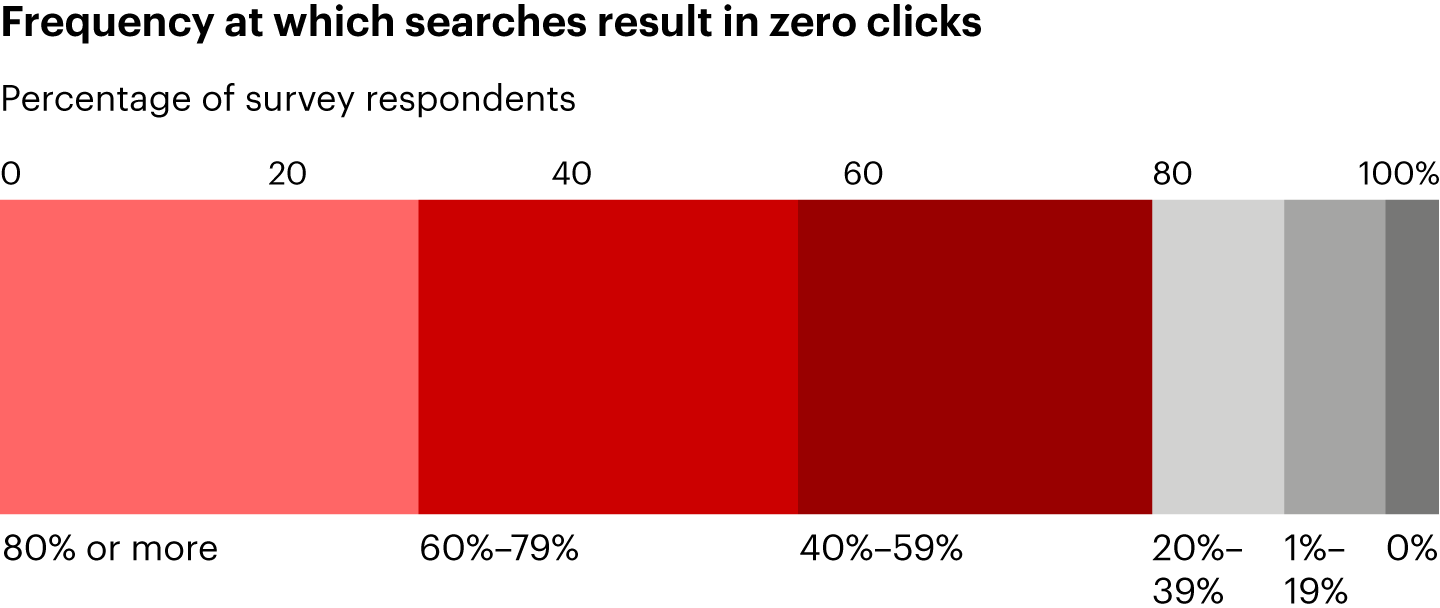
Image source: Bain.com - Bain–Dynata Generative AI Consumer Survey, December 2024 (n=1,117)
The numbers are scary. In a recent Bain & Co consumer survey, 80% of customers relied on ‘zero click’ searches 40% of the time. The rise of AI search summaries and live search results within GenAI chatbots has upended internet user behaviour.
For universities, the challenge of standing out and differentiating in a crowded, homogeneous market has always been difficult. And now applicants are potentially not even viewing your website when compiling a shortlist of study destinations. Years of building attractive, thoughtful online content carefully optimised for search engines and first-time visitors are being rapidly eroded by AI.
But applicants haven’t gone away. They are simply evolving how they interact with your brand. And that might not include visiting your website to begin with.
4 key steps to adapt
1. Website optimisation
Google’s SEO principles don’t need to be disregarded entirely, but adaptation is needed. The new field of GEO (Generative Engine Optimisation) is here.
- Build a list of 50 ‘high-intent’ questions primed for AI Chat.
- Answer them in your marketing and monitor in your website analytics.
- Test performance and improve.
AI systems are attracted to and cite pages that explicit, structured, unambiguous and complete enough to parse without guesswork. Focus on definitive programme pages, one page per programme. Supplement with a decision-tree style FAQ (great for AI extraction).
2. Content Strategy
If you haven’t already, shift your Instagram/blog/youtube strategy away from volume to decision support. Return to your high-intent question list and focus content on comparative content: MBA vs EMBA, City 1 v city 2/3/4, Career comparisons. Give clear guidance on ROI, cost analysis, and career paths. This was already best practice under SEO, but just became more critical with GEO.
Shift your content strategy away from volume and toward decision support.
3. Building authority
Very similar to traditional SEO, AI agents lean heavily on corroboration with trusted sources. Getting cited by trusted parties has never been more necessary, whether in the media, partner universities or research. However Wikipedia and Reddit have become lead sources for AI. Building a significant presence on Wikipedia and broad positive discussion on Reddit can be highly influential for AI chat tools. Between 25-40% of AI chat responses were sourced in Reddit in 2025.
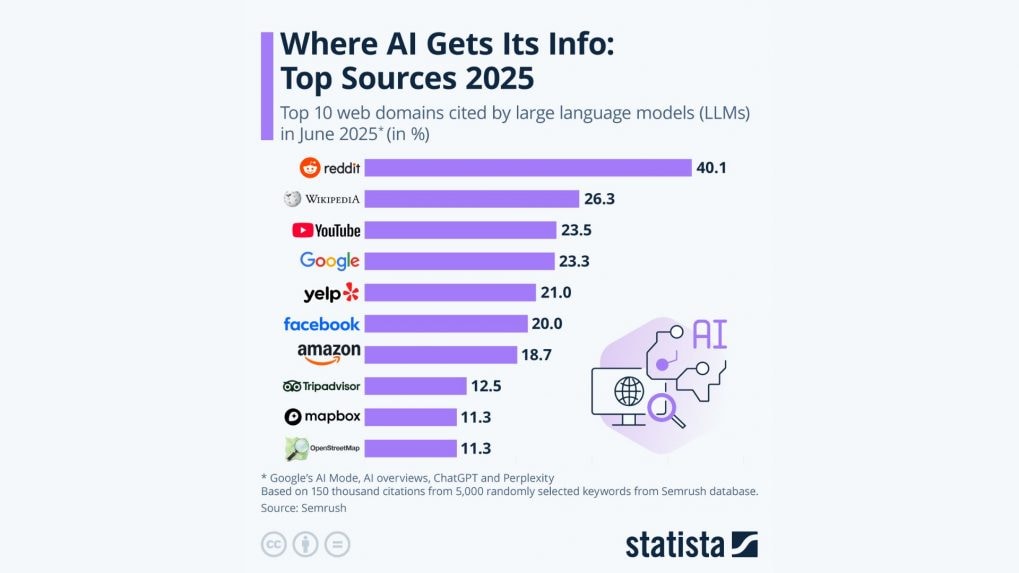
Image source: Statista
4. Brand clarity
Business Schools and Universities have traditionally struggled to differentiate their brands. Business Schools in particular are all required by rankings and accreditations to offer a specific set of programmes with similar characteristics. Applicants expect exposure to similar opportunities and global recruiters. Schools still need to differentiate their message and character. And more so with AI. AI bots are unemotional as they compare and contrast brands and content.
-
- Create a small number of brand statements ‘worth citing’. Make the statements unusual enough to stand out from the crowd. Unique enough to be one of the top five in your continent.
- Reinforce throughout your website, content marketing, and Reddit/Wiki strategy
- Monitor and improve with GA4
The web is changing. What we think we know today might be different tomorrow. The marketer's true skill is in monitoring and analytics. Build your analytics reports to monitor your activities in real time and don’t be afraid to regularly adapt or change. What worked yesterday and drove traffic might not work tomorrow.


